
 Remote
Mining services IT
IT for mining services contractors, built around the roster
For owners, general managers and operations managers of the businesses that supply the mines: maintenance, engineering, drilling, labour hire and haulage. Crews ready on mob day, laptops that can be lost at an airport without losing the business, and answers when the client's supplier cyber questions arrive.
We look after your office, your workshop and your people out on site. Your client's own systems stay theirs; we make sure your side is solid. Based around Mackay or the Bowen Basin? See mining services IT in Mackay.
Check whether you could answer the client's cyber questions- SMB1001 Diamond, independently audited by BSI
- ASD Network Partner
- 4.8 from 40+ Google reviews
Could you answer your client's cyber questions today?
Prequalification and contract renewal forms often carry a cyber section, and auditors are looking harder at how buyers manage suppliers: in March 2026 the Queensland Audit Office found only 2 of 36 contracts it reviewed required the supplier to report its own cyber security incidents2. The eight questions below follow ASD's Essential Eight1 and the basics most forms ask. Tick the ones you could prove today, with evidence, not just a yes.
Your supplier cyber check
0 of 8: gaps the client will ask about
What to fix first (8 gaps)
- Multi-factor sign-in on every account, including email and remote access. We turn it on for everyone, crews included, before anyone flies out.
- Laptops and phones encrypted, with remote wipe. Every work device enrolled and encrypted, so a lost laptop is a replacement, not a breach.
- Every computer protected and watched for threats. Guardz with SentinelOne on every computer, watched 24/7.
- Updates applied on a schedule. Patching is part of every plan, with the report kept as evidence.
- Backups that have been tested by restoring something. Microsoft 365 backed up, with restores checked by a person opening the data.
- Leavers lose access the day they finish. Leavers removed the same day, with written confirmation.
- An incident response plan, and a promise to tell the client. A written plan, and written notice from us of our own security incidents.
- Security training for staff. Short training and phishing tests for office staff and crews.
These are typical questions, not any one client's form; your client's own questionnaire always comes first. Your answers stay in your browser.
In plain English: a yes on the form isn't enough any more. They want the report that shows it.
See what Essential Eight work looks likeMob day, swing change and demob, without the IT scramble
Projects start and finish on the client's dates, not yours. The IT work around each crew change is the same every time, so we make it a routine.
Illustrative scenario, based on situations we see often. Not a single client.
- Before mob day
Ready before they travel
- Accounts created and multi-factor sign-in set up while people are still at home or in the office
- Laptop or tablet enrolled, encrypted and tested before it's handed over
- Your timesheet, safety and document apps checked from the device they'll use
- On site
Help from a distance
- Log a job by phone, by email or with Chip in Teams
- A lost or broken device is locked and wiped remotely, and we set up the replacement
- Business hours: our engineers. After hours: Chip logs it, and the on-call engineer is called for urgent P0 and P1 issues, best effort
- Demob
Closed off the same day
- Access removed the day they finish, with written confirmation
- Devices back, wiped and ready for the next crew
- Project files and mailbox handed to whoever needs them
Your client's site systems, inductions and access cards are theirs. We look after your company's accounts, devices and data.
See how managed IT support runs day to dayOffice, workshop, site, and the airport in between
Most mining services businesses run in four places at once. Each needs something different, and the weak point is usually the gap between them. Pick a place to see what protects it.
Head office: Finance, payroll, tenders
The weak point: Fake invoices and changed bank details aimed at accounts staff.
- Our help desk checks suspicious bank-detail emails before you pay
- Check Point email security in front of every mailbox
- Multi-factor sign-in on every account
Workshop: Shared PCs, parts, yard
The weak point: Shared logins on the workshop PC, and wifi that stops at the roller door.
- Each person signs in as themselves, even on a shared PC
- A UniFi gateway and outdoor access points sized for the yard
- Firmware updated on a schedule, configuration backed up off the device
Site: Crib room, donga, ute
The weak point: A patchy mobile or satellite link, and a laptop nobody has updated in a month.
- Updates and protection that work over any internet link
- Files in OneDrive and SharePoint, not on the laptop alone
- Help by phone or Chip in Teams when the link allows
In transit: Airport, flight, motel
The weak point: A laptop left at the gate, or a phone lost on the way home.
- Every work device encrypted
- Locked and wiped remotely the same day
- A replacement set up from the same profile
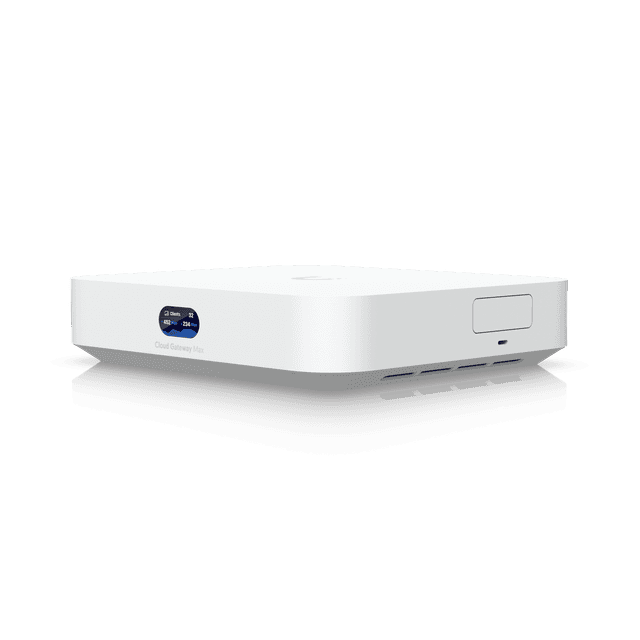
Cloud Gateway Max
The workshop's gateway: firewall, VPN and the UniFi apps in one small box.
- IDS/IPS throughput
- 2.3 Gbps
- Managed UniFi devices
- 30+
- Clients
- 300+
- Ports
- 5 x 2.5 GbE RJ45
- UniFi apps
- Network, Protect, Access, Talk, Connect
Specs: techspecs.ui.com, checked 22 November 2026.
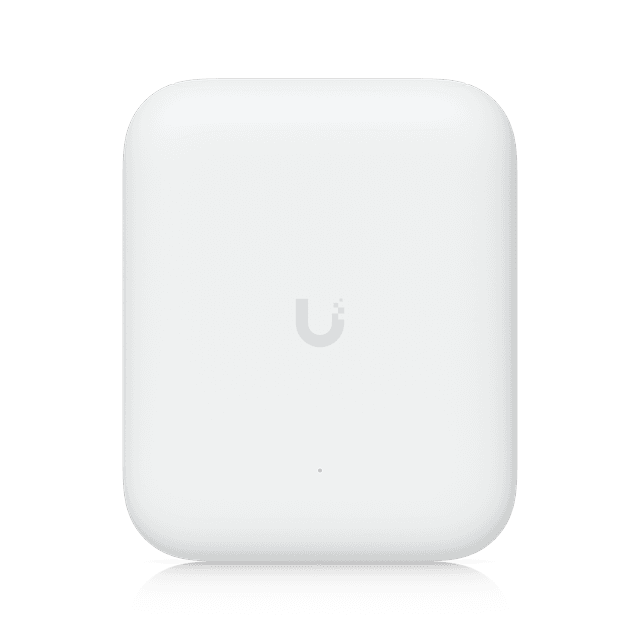
U7 Outdoor
Weatherproof wifi for the yard, wash bay or laydown area, where an indoor unit won't survive.
- Wi-Fi standard
- Wi-Fi 7
- Bands
- 2.4 GHz and 5 GHz
- Spatial streams
- 4
- Max. clients
- 250+
- Coverage
- 465 m²
Specs: techspecs.ui.com, checked 22 November 2026.
Product images: Ubiquiti. UniFi is a trademark of Ubiquiti Inc.
The rules that reach a mining services business
Not all of these will apply to you. This is the short list worth checking with your adviser.
- The Privacy Act. Most businesses with annual turnover of $3 million or less are exempt, with exceptions3. Over that, a suspected eligible data breach must be assessed within 30 days3. Crew files hold licences, tickets, medicals and bank details.
- Coal mine workers' health records. Under the coal mine workers' health scheme, only section 4 of a worker's health assessment report and the exit assessment report may be disclosed to the employer4. If those reports sit in a shared HR folder, lock it down to the people who need it.
- Ransomware payments. Businesses with annual turnover over $3 million must report a ransomware or cyber extortion payment to ASD5, within 72 hours of making it6.
- Critical infrastructure (SOCI Act). The SOCI Act covers 11 sectors, such as energy, transport and water, and mining isn't one of them7. If you work on an asset that is covered, the owner's obligations may show up in your contract.
Medium businesses reported an average of $141,300 per cybercrime report in 2025-26, up 45%, according to ASD8.
We aren't lawyers. We set up the controls and keep the evidence; your advisers give the legal view.
See managed detection and responseCheck us before you call
You should be able to check what we say without taking our word for it.
- SMB1001 Diamond
- Independently audited by BSI. Search Real Bytes on CyberCert Verify.9
- ASD Network Partner
- We're part of the Australian Signals Directorate's partner network.
- 4.8 from 40+ Google reviews
- Read them on our client success page.
- Since 2013
- In business since 2013, with Real Bytes as it is today formed in 2017.
Our stack: Guardz with SentinelOne, Huntress, Check Point, Microsoft, Ubiquiti UniFi, ConnectWise, Pax8. We also support, when a client already has them: CrowdStrike, Sophos, Fortinet, Meraki, Veeam.
Our engineers answer in business hours, Monday to Friday. After hours, Chip, our AI receptionist, answers and logs the request, and the on-call engineer is called for urgent P0 and P1 issues, best effort. Security monitoring runs 24/7.
Some of the people you'll deal with
 Philip VernerDirector
 Blake BathGeneral Manager
 Mason WiseMSP Practice Lead
 Mitchell MorganAutomation & Platform Lead
 Travis JacobOperations Manager
 Bill Nobbs-O'BrienService Desk & Field Engineer
Photos: Real Bytes. Meet our engineers
When we're not the right fit, and what we need from you
Better to know now than after a tender has closed.
We're probably not the right fit if
- You need someone to run plant control systems or a mine's operational technology. We look after the business IT that supports your crews.
- You want us inside your client's systems. Those belong to your client, and access is on their terms.
- You want legal advice on a contract or the Privacy Act. We set up the controls and the evidence; your advisers give the legal view.
What we need from you
- One person who can approve changes and tell us about mob and demob dates early.
- A list of who has which device, and which devices belong to the business.
- Your clients' rules for how your people reach their systems.
Common questions from mining services contractors
Do you support contractors in the Bowen Basin and other regions?
Yes. Remote first, with on-site visits across Australia, planned around the job. For Mackay and the Bowen Basin, see mining services IT in Mackay.
Can you help us answer a client's supplier cyber questionnaire?
Yes. We already help clients with insurer questionnaires, and supplier forms ask much the same things. We show you which answers you can evidence today, which need work, and in what order to fix them.
Will you work inside our client's systems?
No. Your client's site systems, portals and access rules are theirs. We look after your company's accounts, devices and data, and make sure your people can reach the client's systems the way the client requires.
Does the SOCI Act apply to us?
Probably not directly. The SOCI Act covers 11 sectors and mining isn't one of them7. If you work on a covered asset, such as a port, energy or transport asset, expect the owner's obligations to appear in your contract.
We already have an IT person. Do we need you?
Maybe not for everything. We can back them up with monitoring, after-hours cover and projects, and they stay in charge. See co-managed IT.
What happens after hours?
Our engineers answer in business hours, Monday to Friday. After hours, Chip, our AI receptionist, answers and logs the request, and the on-call engineer is called for urgent P0 and P1 issues, best effort. Security monitoring runs 24/7.
How much does it cost?
Managed IT is priced per person, per month. Plans start at A$150 a person a month ex GST, with Microsoft 365 Business Premium included, and every plan carries the same security services. Project work is quoted before it starts. Every plan, and what is in and out of each, is on our Pricing page.
Get your side of the contract solid
A free 30 minute chat with a senior engineer. Bring the last supplier cyber form you were sent, or the next mob date.
Three months, then month to month on 60 days' notice. No exit fees. Onboarding is quoted before you commit.
Already a client? Log a job in your portal or email helpdesk@realbytes.com.au.
What happens next
- You pick a time that suits you.
- One of our engineers calls you. It takes 30 minutes and it's free. There's no slide deck.
- If we can help, we send a written plan. If we can't, we'll tell you who can.
- Nothing happens until you say yes.
Related: mining services IT in Mackay, Essential Eight compliance, managed detection and response, UniFi business networks and co-managed IT.
Sources
Figures and sources checked 22 November 2026. The small numbers on this page link here.
- ASD's Essential Eight, as reproduced in the Essential Eight Assessment Process Guide. Government of Western Australia copy of ASD's guide, November 2022
- Queensland Audit Office, Managing third-party cyber security risks (Report 13: 2025-26). Tabled 26 March 2026
- Federal Register of Legislation, Privacy Act 1988. Compilation of 4 June 2026: small business turnover threshold and section 26WH
- Business Queensland, Confidentiality of health data (coal mine workers' health scheme). Queensland Government, read 22 November 2026
- Federal Register of Legislation, Cyber Security (Ransomware Payment Reporting) Rules 2025. In force from 30 May 2025
- Department of Home Affairs, Ransomware payment reporting factsheet. Read 22 November 2026
- Cyber and Infrastructure Security Centre, Security of Critical Infrastructure Act 2018. The 11 sectors, read 22 November 2026
- Australian Government, business.gov.au: Annual Cyber Threat Report 2025-26. Summarising ASD's Annual Cyber Threat Report 2025-26, 28 October 2026
- CyberCert Verify. SMB1001 certificate register